
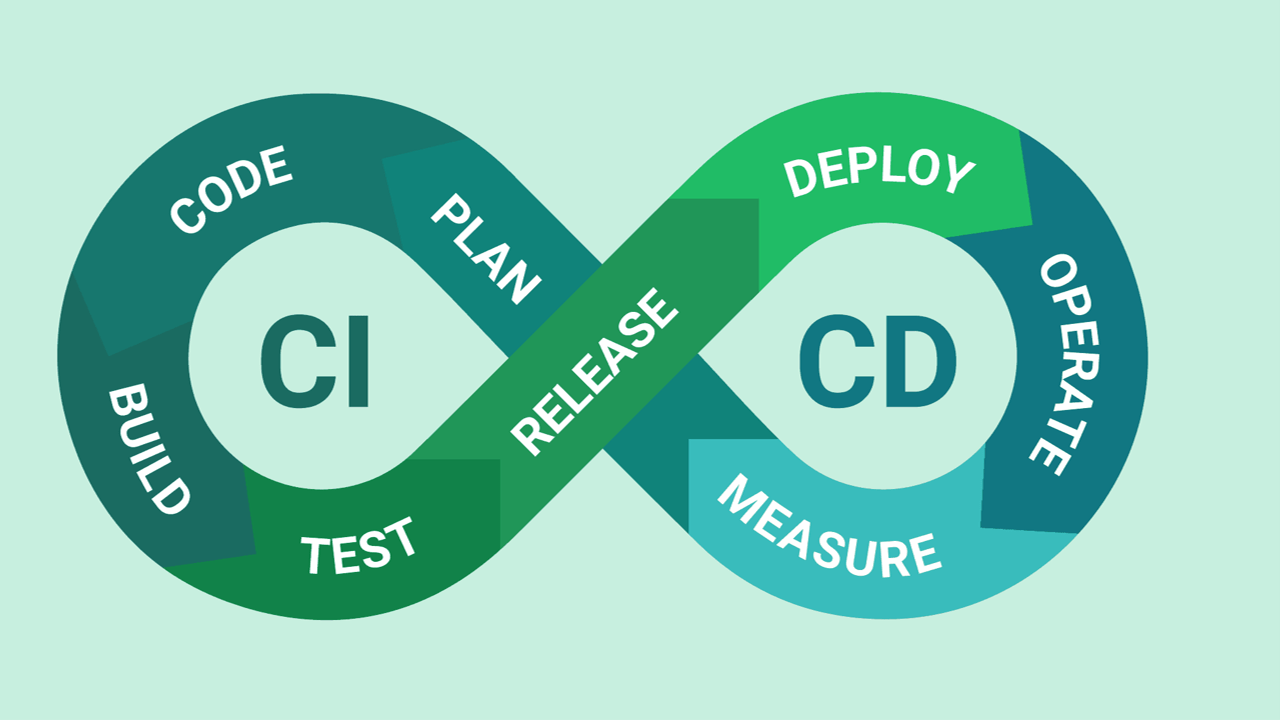
CI/CD what does it mean?
We use the name CICD a lot, but do you also know where it exactly stand for?
The “CI” always stands for the same thing “Continuous Integration” it stands for automatically builds, tests, and integrates code changes within a shared repository.
The “CD” can stand for 2 things depending on the level on human interaction during the process.
If the CD stands for “Continuous delivery” it will automatically deliver code changes but a human still needs to approve steps manually.
When the CD stands for “Continuous deployment” it will automatically deploy code changes, with this process it will fully be automated and no human interaction will be needed.
What are the benefits?
There a for big benefits for creating/using a CI/CD.
First of all the Development velocity, the ongoing feedback allows developers to commit smaller changes more often vs wainting for one big release.
Secondly Stablility and reliability , because of automated, continuous testing your codebase will remain stable and release-ready at any time.
Last but not least with automated processes your business will be freed from a lot of manual tasks and with that the organization can focus resources on innovation, customer satisfaction and other more importend tasks.
What’s in your toolkit?
The first thing in your toolkit is version control . CI begins in shared repositories, where team members collaborate on code using version control. The version control keeps track of code changes and makes it easy to revert it if something breaks.
CI build tools automatically packages up files and components into releases and runs test for quality, performance,… After required checks, CD tools send builds off to the operation team for future testing and staging
In some project its also necessary to have reviews and approvals . Treating code review as a best practice improves code quality, encourages collaboration, and helps even the most experienced developers make better commits. Team reviews and approves code in pull requests or leverage integrated developemt environments for pair programming.
CI/CD tests and deploys code in different environments, from test environments to production environments. Environments often have their own specific variables and protection rules to meet security and compliance requirements.
What makes it successful?
First of all the automation , all the steps can be done manually but the goal is to automate as many tasks as possible. A good CI/CD workflow automates builds, testing, and deployment so you have more time for coding.
A CI/CD is transparent , if a build fails, developers need to be able to quickly assess what went wrong and why.
CI/CD contributes to your overall DevOps performance, particulary speed . It’s said that you make more commits, and you commit more quickly to production
When used with other approaches like test coverage, observability tooling, and features flags, CI/CD makes software more resistant to errors. Incidents get solved quicker and its easier to rollback your code to a preview version
Automation includes security. With DevSecOps gaining traction, a future-proof CI/CD pipelines has checks in place for code and permissions, and provides a virtual paper trail for auditing failures, security breaches, non-compliance-events
 Pauliens Blog
Plaats een reactie